 Skip to content




It’s a cold winter night, and you return home expecting warmth, but something feels off. Instead of a comforting embrace of heat, there’s a noticeable chill in the air. You check the thermostat, but then you’re left wondering, “Why Isn’t My Heat Pump Heating Properly?”
This is a common frustration, but often, the solutions are simpler than you might think. As HVAC professionals serving Port Washington, WI, and nearby areas, we encounter this issue frequently.
A malfunctioning heat pump affects your comfort and impacts energy efficiency, leading to increased utility bills. A heat pump in good working condition can deliver 1.5 to 3 times more heat energy than the electricity it consumes. Therefore, understanding and resolving the question of “Why Isn’t My Heat Pump Heating Properly?” is essential for comfort, cost savings, and environmental reasons.
Understanding How Heat Pumps Work
Heat pumps offer a versatile solution for both heating and cooling, serving as an alternative to traditional furnaces and air conditioning units. Unlike systems that generate heat, heat pumps work by transferring heat. This makes them an energy-efficient and eco-friendlier option.
In the summer, a heat pump extracts heat from inside your home and releases it outdoors. During winter, this process is reversed; the heat pump pulls heat from the outside air, even in low temperatures, and brings it indoors.
It might seem counterintuitive, but even cold air contains some heat energy. Even in the cold air, heat is able to transfer.
The Core Components of Heat Pumps
To better understand “Why Isn’t My Heat Pump Heating Properly?”, let’s examine the main components. The system involves an outdoor unit, an indoor unit, and a thermostat.
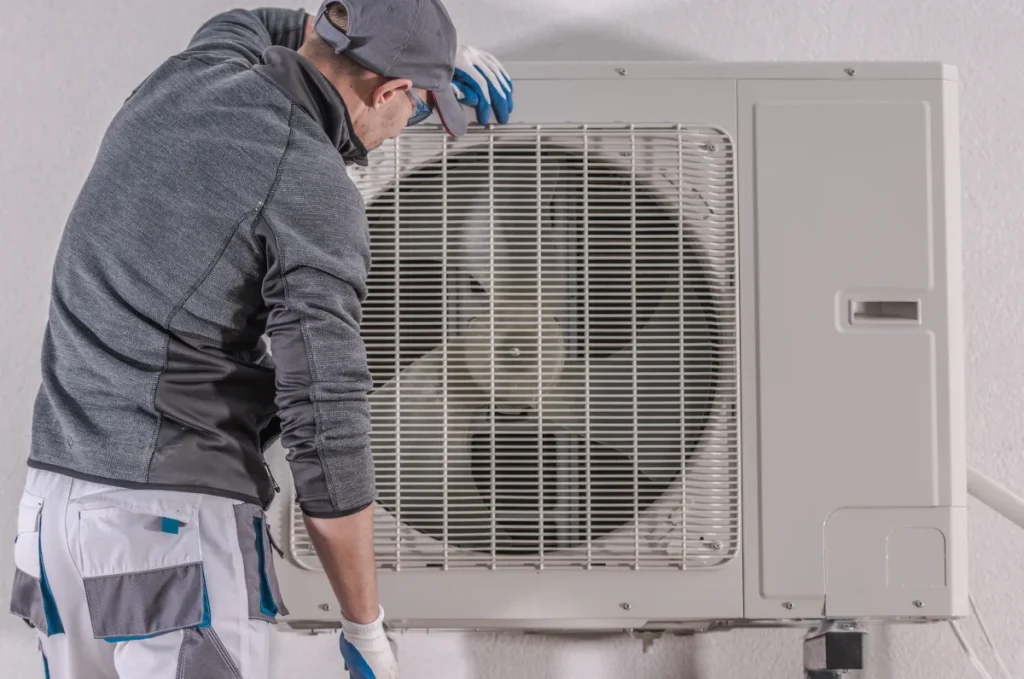
The outdoor unit, resembling the exterior part of an AC, plays a crucial role in capturing or expelling heat. It contains copper tubes filled with refrigerant, which absorbs heat from the outside air and then this heat is transferred indoors.
Inside, a fan circulates air over the coil, warming it. The warm air is then distributed throughout your home via air ducts. The system reverses this process for cooling, transferring indoor heat outside.
Common Causes: Why Isn’t My Heat Pump Heating Properly?
Some of the most frequent issues affecting heat pumps include thermostat problems, clogged air filters, and several other potential malfunctions. Homeowners should expect these at some point, even if it’s unlikely.
Each winter, we receive numerous calls from homeowners facing various troubleshooting situations with their heat pumps.
Thermostat Troubles
First, verify that your thermostat setting is on “heat.” It might inadvertently be set to “cool” or “fan.” Make sure the thermostat set is on “heat”.
Sometimes, the thermostat can be bumped, leading to misalignment or calibration issues. Refer to your user manual for guidance on resetting it.
Many new clients express concerns that could have been avoided with regular annual maintenance. Regular maintenance by an HVAC professional could catch this before the situation becomes more critical.
Dirty Air Filters
Clogged air filters restrict airflow, similar to breathing with a stuffy nose. Dirty air filters are a frequent cause of heat pump issues.
Replacing the air filters can significantly improve performance. In extreme cases, a severely clogged filter can cause the heat pump to shut down completely.
Addressing the dirty air filter helps answer, “Why Isn’t My Heat Pump Heating Properly?”
Refrigerant Levels
Heat pumps use refrigerant, a special chemical that cycles between liquid and gas states, to utilize thermal energy. Insufficient refrigerant levels can hinder the heat pump’s ability to extract warmth from outdoor air during heating mode.
Low refrigerant usually indicates a leak, requiring professional HVAC service due to the specialized equipment involved. Refrigerant is like the lifeblood of the heat pump. Only HVAC experts, can address issues.
Outdoor Unit Problems
In heat mode, the outdoor unit needs to “breathe,” using the surrounding air for both heating and cooling. Blockages can severely impact its functionality.
Ensure the area around the unit is clear of leaves, snow, and vegetation to maintain proper airflow. However, for internal issues within the outdoor unit, contacting an HVAC technician is necessary.
Problems with the Reversing Valve
The reversing valve is what allows the heat pump to switch between heating and air conditioning. Think of it as the component that changes the system’s function with the seasons.
Homeowners sometimes attempt to switch modes repeatedly to troubleshoot, but this usually doesn’t resolve the issue. Instead, attempt to find the owner’s manual to look for the steps.
If the reversing valve malfunctions, replacement by a licensed HVAC technician is required.
Advanced Troubleshooting & Why Isn’t My Heat Pump Heating Properly?
More complex problems extend beyond basic checks and require a detailed understanding of each component’s performance. Tackling “Why Isn’t My Heat Pump Heating Properly?” may involve examining electrical issues. For guidance, see the table below:
| Problem | What Happens? |
|---|---|
| Breaker Flips Off | This shuts off your pump and occurs if electricity to your machine is interrupted. Check your electrical panel to evaluate. If resetting the circuit breaker doesn’t work, it likely requires professional HVAC and electrical inspection to ensure proper wiring and equipment functionality. |
| Outside Unit Not Starting | Every outdoor heat pump unit has a power cutoff located on the exterior wall nearby. Verify that it’s in the ‘On’ position, as a blown component here signals the need for an HVAC contractor to install a replacement part. A broken compressor is a common culprit in this case. |
| Inside Switch Problems | The indoor unit, containing the fan and heating elements, has a switch similar to a standard wall power switch. If it’s not set to “On,” heating won’t function correctly. Setting it to ‘On’ ensures proper operation, providing warmth during colder periods. The constantly running of a fan may indicate an issue with the inside switch. |
DIY Fixes and Professional Help
DIY steps include verifying settings, ensuring the system is in heating mode for cold months, and not in cooling mode used during summer. It’s normal for the air blowing from a heat pump to feel cooler than the intense heat generated by a furnace; this indicates proper operation.
Checking these aspects can help initially. However, contacting a heat pump repair service provider is often necessary, as repairs can involve complex procedures or component replacements requiring certified technicians.
Real-Life Examples and Testimonials
Many residents in the Port Washington area experience heat pump failures. Regular HVAC inspections by professionals are crucial due to the region’s variable climate. Winters can be extremely cold, but having experienced repair personnel available ensures systems return to optimal performance during the coldest months.
Homeowners should realize when their heating is blowing hot when in cooling mode. If your heating and cooling modes are mixed up, it’s a sign of problems. The same is true if it’s blowing cool air in the winter.
Frequently Asked Questions (FAQs)
Why does my heat pump struggle in extreme cold?
Heat pumps extract heat from the outside air. The colder it gets, the harder they must work. In extremely low temperatures, the system may rely more on auxiliary heat (if equipped), which can be less efficient. It can impact your indoor air quality to not have your system properly checked.
Can a heat pump cause high humidity?
Yes, especially in cooling mode.
If your system is oversized or has airflow issues, it may not run long enough to remove humidity effectively. A professional HVAC maintenance plan can resolve the problem.
How often should I service my heat pump?
Professional HVAC maintenance at least once a year is recommended. More regular service may be necessary. It depends on your usage, and the area you live in.
What are signs of a refrigerant leak?
Decreased heating or cooling, hissing or bubbling noises near the refrigerant lines, and ice buildup on the outdoor unit can indicate a leak. The desired temperature won’t be maintained when this occurs.
This also includes problems like water heaters having no hot water, indicating plumbing services are needed. Some of our additional professional services, are electrical services and generator installation.
Conclusion
The question “Why Isn’t My Heat Pump Heating Properly?” often reveals both simple DIY solutions, like checking air filters, and more significant issues requiring technician intervention. Heat pump failures present homeowners with challenges regarding comfort and system functionality, necessitating effective solutions.
Contacting experienced technicians who specialize in various heat pump and AC problems ensures accurate diagnoses and repairs. The key is having it working to get back to normal home comfort levels.
Contact us today for more information or to schedule a free consultation.