

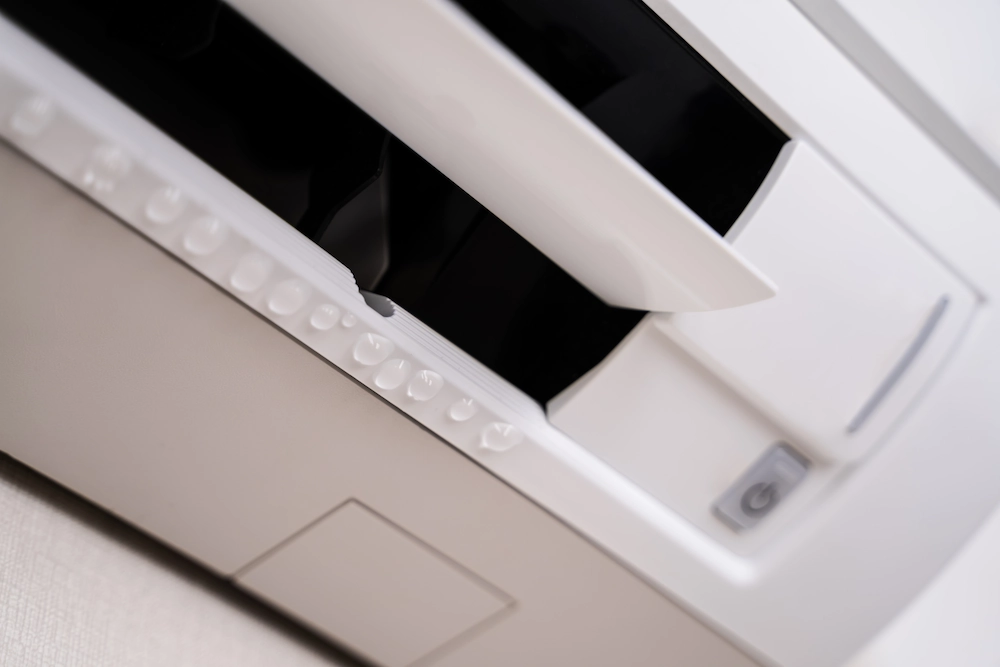
Why Is My AC Leaking Water? 5 Common Causes & Easy Fixes
Your AC is leaking water because of a clogged condensate drain line, frozen evaporator coils, a damaged drain pan, improper installation, or low refrigerant levels. While some condensation is normal during operation, excessive water leakage indicates a problem that needs attention. Most AC leaks can be fixed with simple maintenance, but severe cases may require professional help to prevent water damage to your home.
Normal AC Condensation vs. Problematic Leaks
It’s perfectly normal for your air conditioner to produce some water. This happens because your AC removes humidity from the air as part of its cooling process. As warm air passes over the cold evaporator coils, moisture condenses on the coils, similar to how water droplets form on a cold glass on a hot day.
This condensation drips into a drain pan and flows out through a condensate drain line. In a properly functioning system, you should never see this water because it’s safely drained away from your home.
So how do you know if your AC leaking water is normal or a problem? A few drops of water near your outdoor unit on a humid day is typically fine. But puddles forming inside your home, water stains on walls or ceilings, or constant dripping are clear signs of trouble.
5 Common Causes of AC Water Leaks
When your AC is leaking water, several common issues might be to blame. Let’s look at the five most frequent causes:
1. Clogged Condensate Drain Line
The most common reason for an AC leaking water is a clogged condensate drain line. Over time, dirt, dust, algae, and mold can build up in this pipe. When the drain line gets blocked, water backs up and overflows from your AC unit.
Think of it like a clogged sink drain – when water can’t flow down properly, it spills over the sides. Your AC’s drain line works the same way. When it’s clogged, the water has nowhere to go except out onto your floor.
2. Frozen Evaporator Coils
If your evaporator coils freeze, they’ll create excess water when they thaw. Coils typically freeze due to restricted airflow or low refrigerant levels.
When airflow is blocked (often by dirty air filters), the coils get too cold and freeze. Then, when the ice melts, it creates more water than your drain system can handle. This leads to leaks and water damage around your unit.
3. Damaged or Rusted Drain Pan
Your AC’s drain pan catches condensation from the evaporator coils. Over time, these pans can rust, crack, or develop holes, especially in older units.
A damaged drain pan can’t properly hold water, causing leaks around your AC unit. Most drain pans are made of metal or plastic and can deteriorate after 10-15 years of use.
4. Improper Installation
If your AC unit isn’t installed correctly, it might not be level. An unlevel air conditioner prevents proper drainage, causing water to pool and eventually leak.
Installation problems can also include incorrectly sized units, improperly connected drain lines, or poor sealing. These issues often show up soon after installation but might take time to become noticeable.
5. Low Refrigerant Levels
Low refrigerant can cause your evaporator coils to freeze, leading to water leaks when they thaw. Refrigerant doesn’t get “used up” during normal operation, so low levels usually indicate a leak in the system.
When refrigerant leaks, your AC works harder to cool your home. This extra strain can cause the coils to get too cold and freeze, creating excess water when they defrost.
DIY Fixes for a Leaking Air Conditioner
Before calling a professional, there are several things you can try yourself to fix an AC leaking water:
Clearing a Clogged Drain Line
You can often clear a clogged condensate drain line yourself:
- Locate the drain line exit point outside your home (usually a PVC pipe near your outdoor unit).
- Check if water flows freely when your AC runs. If not, it’s likely clogged.
- Turn off your AC at the thermostat and circuit breaker for safety.
- Find the access point on the drain line near your indoor unit.
- Use a wet/dry vacuum to suction out the clog, or flush with distilled vinegar.
Many AC units have a safety switch that shuts the system down when water backs up. After clearing the clog, you may need to reset this switch.
Changing Air Filters
Dirty air filters restrict airflow and can cause your evaporator coils to freeze. Replacing your air filter is an easy fix:
- Turn off your AC system.
- Locate your air filter (usually in the return air duct or the indoor unit).
- Remove the old filter and note its size.
- Install a new filter of the same size, making sure the airflow arrow points toward the unit.
For most homes, changing filters every 1-3 months prevents many AC problems, including water leaks.
Checking and Cleaning the Drain Pan
Inspect your drain pan for damage or rust:
- Turn off your AC system.
- Locate the drain pan under your evaporator coils.
- Remove standing water with a wet/dry vacuum or sponge.
- Clean the pan with soap and water to remove algae and mold.
- Check for cracks, holes, or rust.
For small holes or rust spots, you can use epoxy or water-resistant sealant as a temporary fix. However, a severely damaged drain pan should be replaced.
Ensuring Your AC Unit is Level
For outdoor units, check if your AC is level:
- Use a carpenter’s level on top of your outdoor unit.
- If it’s not level, adjust the pad or supports underneath.
- For window units, make sure they tilt slightly toward the outside to allow proper drainage.
Proper leveling ensures condensation flows correctly to the drain system instead of backing up or leaking.
When to Call a Professional
While many AC water leaks can be fixed with DIY methods, some situations require professional help:
Signs of Serious Problems
Call an HVAC technician immediately if:
- You see water leaking near electrical components.
- Your AC is leaking water and not cooling properly.
- You’ve tried DIY fixes, but the leaking continues.
- There’s a musty smell coming from your vents (possible mold growth).
- You notice water damage on walls or ceilings near your AC.
These signs could indicate more serious issues that require professional diagnosis and repair.
Refrigerant Issues
If your AC is leaking water due to low refrigerant, you’ll need a professional. Handling refrigerant requires special certification and tools. Signs of refrigerant problems include:
- Warm air blowing from vents
- Hissing sounds from your AC unit
- Ice formation on refrigerant lines
- AC running constantly without cooling effectively
Refrigerant leaks are not only bad for your AC but can also harm the environment and pose health risks.
Electrical Problems
Never attempt to fix electrical issues yourself. Call a professional if:
- Your AC trips circuit breakers repeatedly.
- You notice burning smells from your AC unit.
- Water is leaking near wiring or electrical components.
- Your AC won’t turn on at all.
Water and electricity are a dangerous combination. A professional can safely diagnose and repair electrical problems without risk.
How to Prevent Future AC Water Leaks
Preventing AC water leaks is easier and cheaper than fixing water damage. Here are some simple maintenance steps to keep your AC running smoothly:
Regular Maintenance Schedule
Establish a regular maintenance routine:
- Monthly: Check and replace air filters if dirty.
- Quarterly: Clean around your outdoor unit, removing debris and vegetation.
- Annually: Schedule professional maintenance before summer.
Professional maintenance typically includes cleaning coils, checking refrigerant levels, and ensuring proper drainage – all key factors in preventing water leaks.
DIY Preventive Measures
Several simple steps can help prevent AC water leaks:
- Pour bleach or vinegar down the condensate drain line every 1-2 months to prevent algae growth.
- Keep your outdoor unit clear of leaves, grass, and debris.
- Check your drain pan regularly for early signs of rust or damage.
- Install a secondary drain pan under your indoor unit for added protection.
- Consider a condensate pump if your drain line doesn’t have enough slope.
These simple measures can save you from expensive water damage repairs down the road.
Smart Technology Options
Modern technology offers additional protection against AC water leaks:
- Condensate overflow switches automatically shut off your AC if water backs up.
- Water sensors can alert you via smartphone when leaks are detected.
- Smart thermostats can monitor system performance and alert you to potential issues.
These devices provide early warning of problems, often before major leaks occur. They’re especially valuable if you travel frequently or have an AC unit in a rarely visited area like an attic.
Frequently Asked Questions
Is it normal for my AC to drip water outside?
Yes, it’s normal for your outdoor AC unit to drip some water, especially on humid days. Your air conditioner removes moisture from indoor air, and this condensation needs to drain somewhere. However, excessive pooling or water coming from unusual places indicates a problem.
Can a leaking AC cause mold?
Absolutely. When your AC is leaking water inside your home, the moisture creates perfect conditions for mold growth. Mold can develop within 24-48 hours in damp environments. If you notice musty smells or see discoloration near your AC, you might already have mold, which requires professional remediation.
How much does it cost to fix an AC leak?
Repair costs vary depending on the cause of the leak. Simple fixes like clearing a clogged drain line might cost $100-$250. Replacing a drain pan could run $250-$500. More complex issues involving refrigerant leaks or major component replacements might cost $500-$2,000. Regular maintenance ($75-$200 annually) is much cheaper than repairs.
Will a leaking AC still cool my home?
A leaking AC may still cool your home initially, but its efficiency will decrease. If the leak is caused by frozen coils or refrigerant issues, cooling performance will definitely suffer. Even if cooling seems normal, addressing leaks promptly prevents more expensive damage to your system and home.
How often should I change my AC filter to prevent leaks?
Most manufacturers recommend changing standard 1-inch filters every 30-90 days. If you have pets, allergies, or live in a dusty area, change them monthly. High-efficiency filters (3-5 inches thick) can last 3-6 months. Regular filter changes prevent restricted airflow that can lead to frozen coils and water leaks.
Can I use my AC if it’s leaking water?
It’s not recommended to run your AC if it’s leaking water, especially if the leak is inside your home. Continuing to operate a leaking unit can cause water damage to your property and potentially damage electrical components in your AC system. Turn off your AC and address the leak before resuming normal operation.
Don’t Let AC Leaks Dampen Your Comfort
Finding your AC leaking water can be concerning, but now you understand the common causes and solutions. From clogged drain lines to frozen coils, most AC water leaks have straightforward fixes. Regular maintenance and prompt attention to small issues can prevent bigger problems down the road.
Remember that while some fixes are DIY-friendly, others require professional expertise. Never hesitate to call a professional HVAC technician when dealing with refrigerant issues, electrical problems, or persistent leaks.
Ready to solve your AC water leak problems for good? Contact Strickland Heating and Air today. Our experienced technicians can identify and fix the source of your leak, ensure your system runs efficiently, and help you prevent future problems. Don’t wait until a small leak becomes a big headache – contact us now for peace of mind and a perfectly functioning air conditioning system.