


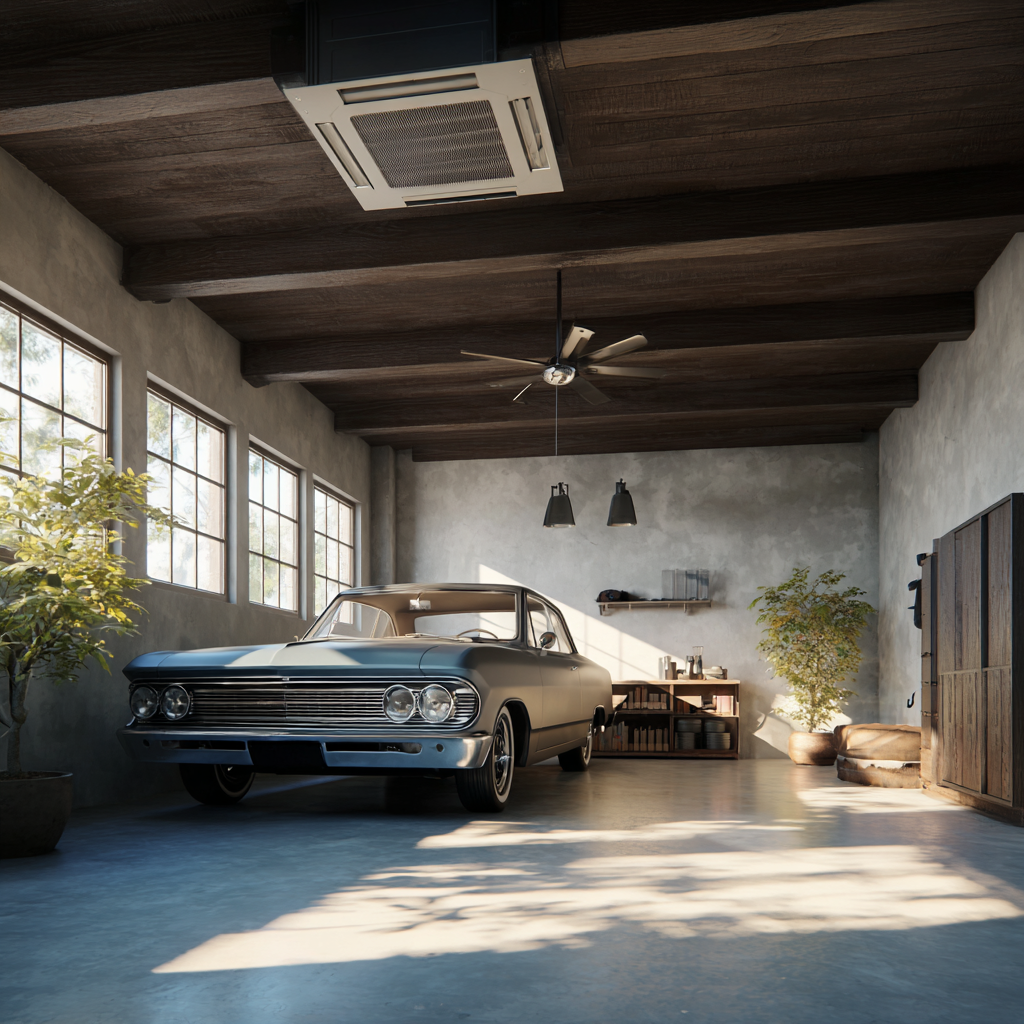
Cooling Solutions for Texas Garages and Workshops: Beat the Heat Year-Round
Texas heat can make garages and workshops unbearable during summer months. The good news is that effective cooling solutions for Texas garages and workshops exist for every budget and space. From simple ventilation improvements to complete climate control systems, you can transform your hot, stuffy workspace into a comfortable area year-round. The best approach combines proper insulation, ventilation, and cooling equipment suited to your specific needs and space requirements.
Understanding the Texas Heat Challenge
Texas summers bring extreme temperatures that can make working in garages and workshops uncomfortable and even dangerous. In many parts of the state, summer temperatures regularly exceed 100°F. This heat gets trapped in enclosed spaces like garages, often pushing indoor temperatures even higher.
Garages and workshops face unique cooling challenges. Most weren’t built with comfort in mind. They typically lack insulation, have large door openings, and contain heat-generating equipment. Many Texas homeowners use these spaces for hobbies, car repairs, woodworking, or as home gyms, making cooling solutions essential.
Heat doesn’t just cause discomfort—it can damage tools, materials, and vehicles stored in these spaces. Wood can warp, electronics can fail, and paints or chemicals might become unstable. Finding effective cooling solutions for Texas garages and workshops protects both you and your investments.
Basic Ventilation Solutions
Ceiling and Wall Fans
Ceiling fans provide simple, affordable cooling for garages and workshops. They create air movement that makes the space feel 4-5 degrees cooler through the wind-chill effect. Look for models with reversible motors to help with air circulation year-round.
Wall-mounted fans work well in spaces where ceiling fans aren’t practical. They can be positioned to direct airflow exactly where needed. Some models oscillate to cover more area. For maximum effectiveness, place fans to create cross-ventilation, with air flowing from one side of the space to the other.
High-volume, low-speed (HVLS) fans are worth considering for larger workshops. These industrial-style fans move large amounts of air with minimal noise. Though more expensive than standard fans, they provide powerful cooling coverage for bigger spaces.
Exhaust Fans and Vents
Exhaust fans pull hot air out of your garage or workshop. They work best when installed high on walls or in the ceiling where hot air naturally rises. For optimal airflow, pair exhaust fans with intake vents on the opposite side of the space.
Gable vents use the natural stack effect to release hot air. As hot air rises and exits through these vents, cooler air is drawn in from lower openings. This passive ventilation system works without electricity, making it energy-efficient and maintenance-free.
Whole-house fans can serve double duty for attached garages. These powerful fans, typically installed in attic spaces, can pull air through the home and garage, creating strong ventilation. They work best during cooler morning and evening hours.
DIY Swamp Cooler
A homemade evaporative cooler (swamp cooler) can be an effective cooling solution for Texas garages and workshops in drier regions. The basic design uses a fan blowing across wet material to cool the air through evaporation. You’ll need a box fan, cooling pads or frozen water bottles, and a container.
This DIY approach costs much less than commercial units. While not as powerful as manufactured models, these simple coolers can reduce temperatures by 5-10 degrees. They work best in areas with lower humidity, as the cooling effect depends on water evaporation.
Commercial evaporative coolers offer more cooling power than DIY versions. They use the same principle but with more efficient designs and stronger fans. These units work well in workshops where traditional air conditioning isn’t practical or affordable.
Portable Cooling Options
Portable Air Conditioners
Portable air conditioners offer flexibility for cooling specific areas of your garage or workshop. These freestanding units can be moved where needed and require only a nearby outlet and a way to vent hot air outside. Most models include wheels for easy repositioning.
When choosing a portable AC for cooling solutions for Texas garages and workshops, check the BTU rating. For most single-car garages, look for 10,000-12,000 BTUs. Larger two-car garages or workshops may need 14,000+ BTUs. Remember that these units work best in well-insulated spaces.
The main drawback of portable units is their limited cooling capacity compared to permanent systems. They also take up floor space and create some noise. However, they provide true air conditioning without permanent installation, making them ideal for renters or occasional use spaces.
Evaporative Coolers
Commercial evaporative coolers work well in Texas regions with lower humidity. These units pass air through water-saturated pads, cooling it through evaporation. They use much less electricity than traditional air conditioners, making them economical to operate.
Portable evaporative coolers come in various sizes, from small personal units to large models that can cool several hundred square feet. They require only water and electricity to operate. Some include ice compartments for enhanced cooling on extremely hot days.
The effectiveness of evaporative cooling decreases as humidity rises. In the more humid eastern parts of Texas, these units provide less relief than in drier western regions. They also add moisture to the air, which might affect moisture-sensitive projects or tools.
Spot Coolers
Spot coolers direct cold air precisely where you need it. These specialized portable air conditioners focus cooling on a specific area rather than the entire space. They’re perfect for cooling just your work area in a large workshop.
These units work well for cooling equipment that generates heat. Woodworkers can direct cool air at themselves while operating hot machinery. Car enthusiasts can focus cooling where they’re working on a vehicle. This targeted approach saves energy compared to cooling the entire space.
Rental options exist for temporary cooling needs. If you’re tackling a summer project that requires comfortable temperatures, consider renting a commercial-grade spot cooler. This gives you powerful cooling without the long-term investment in equipment you might rarely use.
Permanent Air Conditioning Solutions
Mini-Split Systems
Mini-split air conditioners offer powerful, permanent cooling without requiring ductwork. These systems consist of an outdoor compressor unit connected to one or more indoor air handlers. They provide efficient cooling solutions for Texas garages and workshops of various sizes.
Installation is simpler than central AC systems. Only a small hole in the wall is needed to connect the indoor and outdoor units. Many homeowners with basic DIY skills can install pre-charged systems, though professional installation ensures optimal performance and warranty coverage.
The zoning capability of mini-splits allows for customized cooling. With multiple indoor units, you can cool only the areas you’re using. Most systems include remote controls and programmable settings to manage temperatures efficiently, saving energy when the space isn’t in use.
Window and Through-Wall Units
Window air conditioners provide affordable, permanent cooling for smaller garages and workshops. These self-contained units fit in standard windows or can be mounted through walls with special kits. They’re available in various BTU ratings to match your space requirements.
Through-wall air conditioners work similarly to window units but are installed permanently in an exterior wall. This installation preserves window space and provides a more secure, weather-tight fit. These units typically require creating an appropriately sized opening in the wall.
Both options are more affordable than mini-split or central systems. They provide true air conditioning rather than just air movement, making them effective even during the hottest Texas days. Modern Energy Star models offer improved efficiency compared to older units.
Central Air Conditioning Extensions
Extending your home’s central air conditioning to your attached garage or workshop might be possible. This approach provides seamless climate control that matches your home’s comfort level. It works best for attached spaces that are well-insulated and sealed.
This option requires professional HVAC evaluation. Your existing system must have sufficient capacity to handle the additional square footage. The contractor will need to extend ductwork and possibly add return air pathways to ensure proper airflow.
Zoning controls can make this approach more efficient. With zoned systems, you can cool the garage or workshop only when needed without affecting the rest of your home. This prevents wasting energy cooling an unoccupied workspace.
Insulation and Heat Prevention
Garage Door Insulation
Insulating your garage door dramatically improves temperature control. As the largest opening in most garages, an uninsulated door allows significant heat transfer. DIY insulation kits using rigid foam or reflective barriers are available at most home improvement stores.
Professional garage door replacement is another option. Insulated garage doors come with R-values indicating their insulation effectiveness. For Texas climates, doors with R-values of 9 or higher provide good heat resistance. These doors also reduce noise and increase security.
Weather stripping around garage doors prevents hot air infiltration. Check and replace worn seals around the perimeter of the door. Bottom seals are particularly important as they prevent hot air from entering underneath the door while also keeping out pests.
Wall and Ceiling Insulation
Adding insulation to walls and ceilings creates a significant temperature difference. Many Texas garages and workshops were built with minimal or no insulation. Adding fiberglass batts, blown-in cellulose, or spray foam insulation creates a thermal barrier against outside heat.
Reflective barriers installed under roofing or in attic spaces reduce radiant heat transfer. These shiny materials reflect heat away from your space rather than absorbing it. In Texas, where solar heat gain is substantial, reflective barriers can reduce cooling needs by 10-25%.
Insulated wall panels provide both insulation and finished walls in one step. These panels, often made of foam sandwiched between durable facings, can be installed over existing walls. They provide excellent insulation while creating a clean, finished look for your workspace.
Window Solutions
Window films block heat while allowing light to enter. These adhesive films reflect solar radiation and block UV rays. They’re an affordable option that can reduce heat gain through windows by 30-50% without major modifications to your space.
Exterior window shades prevent heat from reaching windows. Options include awnings, solar screens, and exterior blinds. By blocking sunlight before it hits the glass, these solutions are more effective than interior window treatments at preventing heat buildup.
Replacing old windows with energy-efficient models provides long-term benefits. Look for windows with low-e coatings and double glazing. While more expensive initially, these windows significantly reduce heat transfer and can lower cooling costs for years to come.
Smart Cooling Strategies
Timing Your Activities
Plan heat-generating activities for cooler parts of the day. In Texas, early mornings and evenings are typically much cooler than mid-afternoon. Schedule intense work like welding, running power tools, or physical labor during these cooler periods.
Use automated timers to pre-cool your space before use. If you regularly work in your garage or workshop at specific times, set your cooling system to start an hour beforehand. This makes the space comfortable when you arrive without wasting energy cooling it all day.
Consider seasonal project planning for comfort and efficiency. Save projects requiring precision or comfort for cooler months. During peak summer heat, focus on tasks that can tolerate warmer conditions or require less time in the space.
Combining Methods for Maximum Effect
Layer cooling solutions for comprehensive climate control. Start with good insulation, add efficient ventilation, and supplement with appropriate cooling equipment. This multi-faceted approach provides better results than relying on any single method.
Create cooling zones for efficiency in larger spaces. Focus your cooling efforts on the areas where you spend most of your time. Use portable or spot cooling for your immediate work area rather than trying to cool the entire space to the same temperature.
Adjust your strategy based on changing conditions. Texas weather can vary dramatically, even within a single day. Having multiple cooling options allows you to adapt to changing conditions, using only what you need when you need it.
Maintenance Tips
Regular maintenance keeps cooling systems working efficiently. Clean or replace air filters monthly during heavy use periods. Keep outdoor units free of debris and vegetation. Check refrigerant levels in air conditioning systems annually.
Seasonal preparation improves performance. Before summer arrives, inspect all cooling equipment, clean fans, and check for worn parts. Ensure ventilation pathways remain unobstructed. This preventive approach helps avoid breakdowns during the hottest days.
Monitor system performance for early problem detection. Unusual noises, reduced airflow, or inadequate cooling may indicate developing issues. Addressing these promptly prevents complete system failures and extends equipment life.
Frequently Asked Questions
What’s the most cost-effective cooling solution for a Texas garage?
For most Texas garages, a combination of good insulation, ceiling fans, and a portable evaporative cooler provides the best balance of cost and effectiveness. Start by insulating your garage door and sealing air leaks, then add ceiling fans for air circulation. In drier parts of Texas, an evaporative cooler can provide additional cooling at a fraction of the cost of air conditioning.
How much does it cost to install a mini-split AC in a workshop?
Mini-split installation costs range from $1,500 to $5,000 depending on capacity and features. A typical two-car garage or medium-sized workshop might require a 12,000-18,000 BTU system, costing around $2,000-$3,500 installed. DIY installation kits can reduce this cost, but professional installation ensures proper sizing and optimal performance.
Can I cool my detached workshop without spending a fortune?
Yes, cooling solutions for Texas garages and workshops don’t have to break the bank. Start with passive measures like proper insulation, reflective roof coatings, and strategic ventilation. Add portable cooling options like high-velocity fans or evaporative coolers. These approaches can make your workshop comfortable for a few hundred dollars rather than several thousand.
How do I calculate what size air conditioner I need?
For basic estimation, use 20 BTUs per square foot for a garage or workshop in Texas. For example, a 400 square foot space would need approximately 8,000 BTUs. Increase this by 10-20% for spaces with high ceilings, poor insulation, or significant sun exposure. For precision sizing, consult with an HVAC professional who can account for all variables affecting your specific space.
Are there cooling solutions that won’t affect my electricity bill too much?
Several energy-efficient cooling options exist. Evaporative coolers use about 25% of the electricity of comparable air conditioners. Ceiling fans consume minimal power while providing noticeable comfort improvement. Combining good insulation with programmable cooling systems that run only when needed can significantly reduce operating costs compared to continuous cooling.
How can I keep my garage cool without any electricity?
Passive cooling techniques can help without using electricity. Install reflective barriers in the roof to reduce heat gain. Add roof vents or turbine ventilators that use wind power to extract hot air. Paint exterior surfaces with heat-reflective colors. Create shade with trees or exterior awnings. While these won’t match powered cooling on the hottest days, they can make a noticeable difference year-round.
Ready to Transform Your Hot Garage or Workshop?
Finding the right cooling solutions for Texas garages and workshops makes all the difference in creating a comfortable, usable space year-round. Whether you choose simple ventilation improvements, portable cooling options, or permanent climate control systems, the investment pays off in extended usability and protection for your tools and projects.
Start by assessing your specific needs and budget. Consider the size of your space, how often you use it, and what activities you perform there. Then implement a cooling strategy that combines several approaches for maximum effectiveness.
Ready to beat the Texas heat in your garage or workshop? Contact Strickland HVAC today for a personalized assessment and recommendations tailored to your specific space. With the right cooling solution, you can enjoy your projects in comfort no matter how high the temperature climbs outside.