 Skip to content




Breathe Easier at Home Before Fall Allergies Hit
Good indoor air is not a luxury; it is part of feeling good in your own home. As late September arrives in Fort Worth, many families start to notice more sneezing, itchy eyes, and scratchy throats. Ragweed starts to kick up, the air stays warm, and we spend more time inside with the AC running and windows closed. That mix can make allergy and breathing problems feel worse, not better.
What many people do not realize is that indoor air can be more polluted than outdoor air, especially in tightly sealed, energy-efficient Texas homes. Dust, pollen, pet dander, and other tiny bits get trapped and recirculated again and again. Whole-home air filtration is a smart way to handle these problems before peak fall allergies arrive. By cleaning the air through your HVAC system, every room can feel fresher and more comfortable for your family.
As a local, family-owned HVAC company that works in the Fort Worth and Aledo area, we see these indoor air issues every single day. We understand how our Texas climate, long AC seasons, and modern home building styles can affect the air you breathe. Our goal is to explain your options in simple terms so you can choose what makes sense for your home.
Why Fort Worth Homes Need Stronger Air Filtration
Living in and around Fort Worth means dealing with a mix of outdoor air issues that often end up inside your home. We have pollen from native grasses and plants, dust during dry spells, and urban pollution from traffic and general city life. At certain times, smoke from distant wildfires can even drift into North Texas and add to the haze.
All of this outside air gets pulled into your house over time. Your HVAC system runs during most months of the year, always moving air through your ductwork. When that air carries pollutants, your system can spread them into every room.
Some common signs that your home may need better filtration include:
- Dust that comes back quickly after cleaning
- Allergy or asthma symptoms that feel worse at home
- Musty, stale, or “closed up” smells that never really go away
- Tiny particles floating in sunlight near windows
- Family members waking up with stuffy noses or dry throats
Homes with pets, kids, or elderly family members are often more sensitive to poor indoor air. Pet hair and dander, more foot traffic, and more time spent indoors all add to what your filter has to handle. Stronger filtration can help keep these everyday issues from piling up.
How Whole Home Air Filtration Systems Work
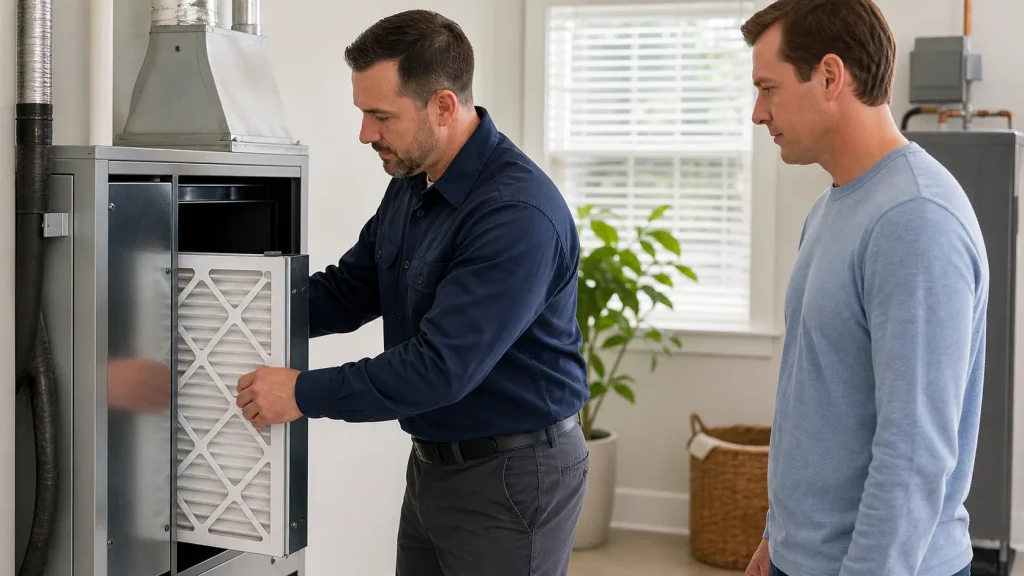
Whole-home air filtration means the filter is not just sitting in one bedroom or one living area. Instead, it is built into your existing HVAC system so that every room served by your ductwork gets filtered air. Each time your AC or heater runs, the air passes through upgraded filter media designed to catch much smaller particles.
Key pieces of a whole-home setup can include:
- A media cabinet installed at the HVAC unit
- Deep-pleated filter media that holds more dust
- Optional HEPA-style equipment that captures very fine particles
- Add-ons such as UV lights to target certain germs and growth on coils
Many homes use basic 1-inch filters. These are easy to buy and change, but they often only catch larger particles. Higher MERV-rated filters and HEPA-style options can grab much smaller bits like fine dust, smoke, and more of the pollen that bothers allergies. The trade-off is that tighter filters can restrict airflow if the system is not designed correctly.
That is why balanced design and professional installation matter. The right setup will:
- Match filter strength to your HVAC system’s airflow needs
- Keep the blower from working too hard
- Help maintain even temperatures in every room
- Support both comfort and efficiency over time
A properly planned whole-home air filtration system cleans your air without stressing your AC or heating equipment.
Choosing the Right Filtration for Your Family’s Needs
Not every house, or every family, needs the exact same filtration level. There are several main options, each with its own strengths.
Common levels of filtration include:
- Standard pleated filters: basic upgrade over flimsy fiberglass
- Whole-home media filters: thicker filters that sit in a cabinet by the unit
- HEPA bypass systems: separate housings that pull a portion of air through very fine filters
- Integrated air purification options: systems that combine filters with additional technologies
Matching the option to your main concerns is the smart way to go:
- For allergies and asthma, higher MERV filters or HEPA-style add-ons are often helpful, along with possible UV lights near the indoor coil to address certain germs and growth.
- For odors and smoke, adding carbon or other specialized media can help reduce smells, especially when combined with better ventilation and regular HVAC use.
- For dust and pet dander, deeper media filters give more surface area so they can trap fine particles without clogging too quickly.
A one-size-fits-all approach does not work because each Fort Worth home is different. Square footage, number of floors, duct design, insulation, and how many people live there all affect what you need. Lifestyle matters too. Cooking habits, pets, hobbies, and cleaning routines all play a role.
A professional in-home assessment allows someone to:
- Look at your current HVAC equipment and duct layout
- Ask about symptoms, odors, and dust levels
- Check existing filters and return air setup
- Suggest a balanced plan for comfort, indoor air quality, and energy use
That way, your whole-home air filtration in Fort Worth fits your real life, not a guess.
Fall Maintenance Tips to Keep Your Air Cleaner
Early fall is a smart time to think about HVAC and air filtration. Kids are back in school, schedules settle down, and your system is still working to manage the heat. This is the perfect moment to get ahead of fall allergies and cooler nights.
Here are some simple habits that help keep the air cleaner between professional visits:
- Check your filter regularly and replace it as often as your technician recommends
- Keep return air grilles and surrounding walls free of dust buildup
- Avoid blocking supply vents with furniture or thick rugs
- Watch for dust rings or gray streaks around vents, which can signal air leaks or dirty ducts
A professional tune-up and inspection in the fall is also helpful. During a visit, a technician can:
- Verify airflow and static pressure so filters and equipment work together
- Look for duct leaks that pull in attic or garage dust
- Confirm that any filtration upgrades are installed correctly
- Clean key HVAC components that can collect dirt and growth
Regular maintenance supports your comfort, helps manage utility costs, and keeps whole-home air filtration systems working the way they should. Clean equipment and well-planned filtration go hand in hand. Over time, this means a cleaner home, fewer airborne irritants, and air that feels easier to breathe for your whole family.
Breathe Cleaner, Healthier Air In Every Room Of Your Home
If you are ready to reduce dust, allergens, and indoor pollutants, our team at Strickland HVAC can help you choose and install the right whole-home air filtration in Fort Worth for your space. We will evaluate your home, explain your options in plain language, and recommend a solution that fits your goals and budget. To schedule a visit or ask questions, simply contact us, and we will follow up promptly to get you on the calendar.