 Skip to content





Stay Comfortable Through Fort Worth’s Sudden Cold Fronts
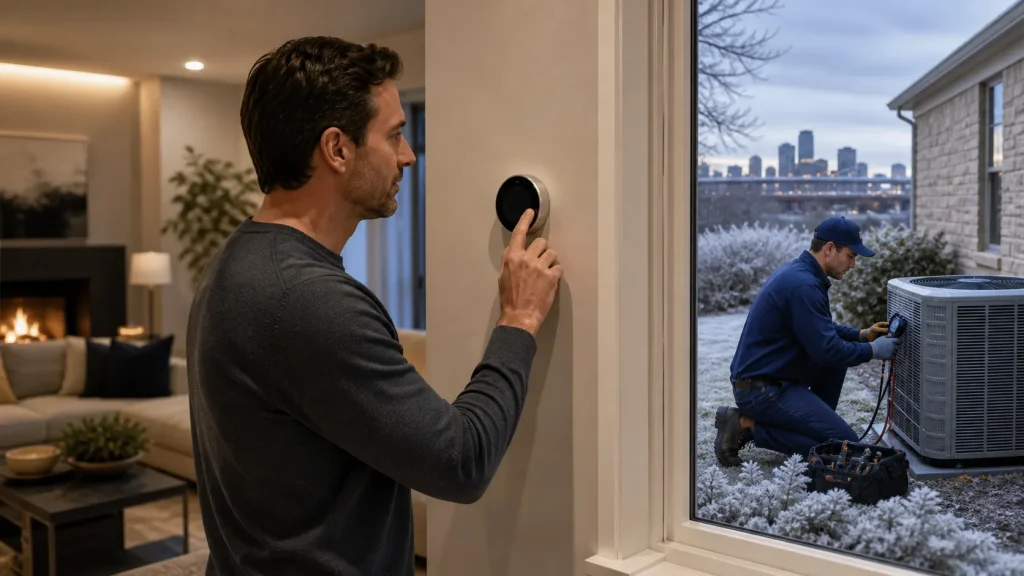
Fort Worth cold fronts can change the feel of your home in just a few hours. A mild afternoon may turn into a chilly evening quickly, and a thermostat schedule that worked yesterday may not feel right today. We often help families decide whether a smart thermostat or simple manual adjustments make more sense for their comfort needs.
The better choice depends on your insulation, HVAC equipment, daily routine, and how quickly outdoor temperatures are falling. Thoughtful thermostat settings can help you stay comfortable, avoid big temperature swings, and manage heating use as cooler weather becomes more common in late fall and winter.
Why Cold Fronts Can Disrupt Simple Thermostat Schedules
North Texas weather does not always follow a neat weekday pattern. You may need cooling during a warmer afternoon, then heating after sunset when a cold front moves through. A manual setback can work well, but it requires you to make changes early enough for your system to bring the home back to a comfortable temperature.
One common mistake is turning the thermostat far above the temperature you actually want. Setting it much higher usually does not make your furnace or heat pump warm the house faster. Instead, the system may run longer than needed, leaving your home too warm once it catches up.
Recovery time also varies from house to house. We consider the condition of the equipment, ductwork, insulation, airflow, and the size of the home when helping you understand what to expect. Homes with air leaks, uneven rooms, older equipment, or leaky ducts may take longer to warm up after a setback.
Keep these points in mind when temperatures fall quickly:
- A fixed schedule may not account for an incoming cold front.
- Large temperature changes can lead to an uncomfortable recovery period.
- Rooms far from the thermostat may warm more slowly than central areas.
- Heat pumps may react differently than furnaces when asked to recover from a major setback.
Heat pump owners should be especially careful with dramatic temperature increases. Depending on the equipment and settings, a large jump in the indoor temperature can cause supplemental heat to run during colder weather. We recommend getting guidance that fits your specific system rather than assuming every heating setup should follow the same schedule.
How Smart Thermostats Support Recovery and Comfort
Many smart thermostats can learn how long your home takes to warm up. Instead of waiting until your planned wake-up time to start heating, the thermostat may begin earlier so your house reaches the selected temperature when you need it. That can be useful during a Fort Worth cold front, when overnight conditions may be much colder than the previous evening.
Scheduling features also make it easier to match your heating to your household routine. If your work hours change, you travel often, or family members come and go at different times, a smart thermostat can make adjustments less dependent on memory. Mobile controls may also allow you to update a setting before you arrive home when the weather changes unexpectedly.
Compatible room sensors can be helpful when one part of the home stays colder than the rest. Rather than focusing only on the temperature near the thermostat, some systems can account for occupied areas. This does not fix duct leaks, weak airflow, or insulation problems, but it can provide better control when the equipment is working properly.
Smart thermostat installation in Fort Worth should begin with a close look at your current HVAC system. Not every thermostat works the same way with every furnace, heat pump, dual-fuel setup, or multi-stage system. Proper wiring and settings matter because the thermostat needs to communicate correctly with the equipment it controls.
When Manual Setbacks Still Make Sense
A smart thermostat is not the only practical option. Manual setbacks can work well if your routine is steady and you are comfortable making small temperature changes at the right times. For example, lowering the heating setting a little while everyone is asleep or away may reduce unnecessary runtime without creating a long recovery period.
Smaller changes are usually easier on your comfort than large swings. If you lower the temperature too much before leaving for work, your system may need a long time to recover when you return, especially during a sharp cold spell. We generally encourage a consistent approach that fits how your home responds.
Manual control may be a good fit when:
- Your household follows a predictable daily schedule.
- You prefer a steady indoor temperature with only modest adjustments.
- Your heating system responds quickly and evenly.
- You are able to remember changes before leaving, returning, or going to bed.
For many heat pump homes, relatively steady settings may be a better choice than deep setbacks. Because equipment designs and home conditions differ, we recommend professional guidance before making major changes to a heat pump schedule. The goal is to support comfortable operation without asking the system to make repeated, dramatic recoveries.
Pair Thermostat Settings with Home Maintenance
No thermostat can fully solve comfort problems caused by poor airflow, dirty filters, duct leaks, or equipment that needs maintenance. If some rooms are always colder than others, or if your heating system seems slow to respond, the issue may be larger than the thermostat setting.
Before winter weather settles in, we encourage you to pay attention to warning signs such as uneven temperatures, weak airflow, unfamiliar system behavior, or frequent thermostat adjustments. Heating maintenance and a professional review of ductwork can help identify problems that make cold fronts harder to manage.
Your preferred temperature should also reflect the people and pets in your home. Young children, older adults, pets, and anyone sensitive to cooler indoor conditions may need a warmer, more consistent setting. Energy use matters, but comfort and safety should remain the priority during severe weather.
Prepare Before the Next Cold Front
The best thermostat strategy is the one that matches your equipment, home, and routine. Smart thermostats can make scheduling and recovery easier when weather shifts fast, while manual setbacks can still work well for households with dependable schedules and modest temperature changes.
Before the next North Texas temperature drop, choose a realistic indoor setting, avoid overcorrecting when the house feels chilly, and make sure your heating system is ready to respond. A well-configured thermostat and properly maintained HVAC system can help your home feel steadier when the weather outside is anything but predictable.
Get Thermostat Guidance That Fits Your Home
Strickland HVAC can help you choose controls that match your household’s routine and heating equipment. Schedule smart thermostat installation in Fort Worth with our team for professional recommendations and setup. If you have questions about your options, contact us to get started.