 Skip to content





Avoid Hidden Headaches When Replacing HVAC in Older Homes
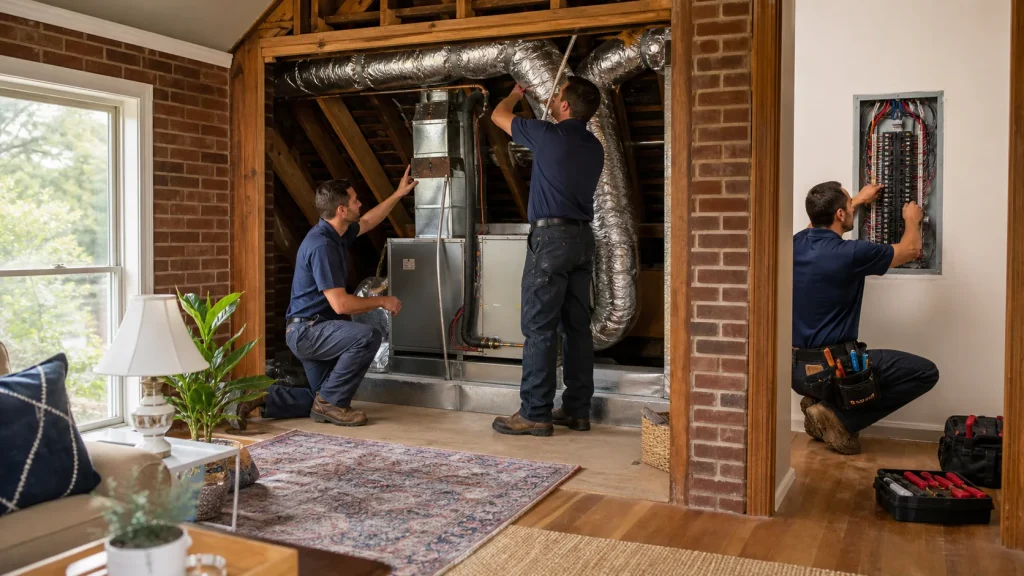
Replacing an HVAC system in an older Fort Worth or Aledo home is not just about picking a new unit and setting a date. Behind those pretty original walls there may be old ductwork, tight electrical panels, and rules from the city that all affect how the job really goes.
If you only look at the sticker price of the new system, you can end up surprised by extra work, extra time, and extra stress. Duct design, electrical capacity, and permitting all play a big role in how well your new system will actually cool and condition your home. That is why it helps to understand what is going on behind the scenes before you sign anything.
In this post, we will talk through what to watch for in existing ductwork, why some homes need electrical or panel upgrades, and how permits and inspections work in Fort Worth and nearby areas. The goal is simple: fewer surprises, better comfort, and a smoother project from start to finish.
How Older Ductwork Can Limit a New HVAC System
Many older homes around Fort Worth and Aledo have plenty of charm but not-so-charming ductwork. Over the years, different owners may have added rooms, moved walls, or swapped units without ever updating the ducts correctly.
Some common duct problems in older homes include:
- Undersized ducts that choke airflow to parts of the house
- Leaky joints where air spills into the attic instead of your rooms
- Old, uninsulated duct runs that heat up in the attic sun
- Random add-ons from past remodels that were never really designed
When you put a modern, high-efficiency system on top of that, the equipment cannot do its job the way it should. You may notice:
- Rooms that never quite cool or feel stuffy
- Vents that are loud or whistling because of high pressure in the ducts
- Higher energy bills even with a newer system
- Extra wear on the blower motor and other parts
A new HVAC system is designed to work with ductwork that meets certain airflow and pressure requirements. If the ducts are too small, too long, or too leaky, your system has to work harder. That can shorten its life and leave you less comfortable.
Before any HVAC system replacement in Fort Worth, TX, a thorough contractor should do more than a quick glance at the attic. A proper duct evaluation usually includes looking at:
- Duct sizing and layout compared to the new system size
- Static pressure, which is like blood pressure for your air system
- Balance between supply vents and return air openings
- Condition of duct insulation and sealing
From there, you can see whether small repairs will be enough or if partial or full duct replacement is needed to meet current codes and manufacturer guidelines.
Electrical and Panel Upgrades Many Older Homes Need
Older homes also often come with older electrical systems. That might mean a smaller main panel, limited free breaker spaces, or wiring that was never meant for all the modern devices and systems we use today.
Some typical electrical challenges we see in older houses include:
- Low-amp service panels that are already close to their limits
- Crowded breaker panels with no room for new circuits
- Older wiring types that may not match current code
- Existing circuits that are already serving too many items
When you replace an HVAC system, you are not just swapping a box outside. Condensers, air handlers, and furnaces each need properly sized, dedicated circuits and breakers. A modern system may require:
- New dedicated circuits for the outdoor unit and indoor unit
- Correct breaker sizes that match the new equipment
- Proper disconnects and shutoff switches near the units
- Surge protection to help protect sensitive components
If the home’s main panel cannot safely handle the added load or cannot accept the new breakers you need, an electrical or panel upgrade might be required before or during the HVAC install. This is about safety and long-term reliability.
A good HVAC and electrical team will check the existing service, look at the panel, and review the current loads before installation day. The goal is to keep everything safe, code compliant, and ready to pass inspection without last-minute changes.
Fort Worth Permits, Codes, and Inspection Timelines
In Fort Worth and nearby cities, permits are usually required for HVAC system replacement. It is not just paperwork. Permits help protect homeowners by making sure work meets mechanical and electrical codes and that refrigerant and ventilation are handled correctly.
Here is what normally happens behind the scenes:
- The contractor usually pulls the permit, not the homeowner
- Work is planned to line up with city inspection schedules
- Inspectors check clearances, duct connections, electrical work, and drains
Inspectors are often looking for things like:
- Proper support and sealing of ductwork
- Correct breaker sizes and wiring methods
- Safe condensate drains and shutoff devices
- Adequate working space around equipment
During busy seasons, like fall when many homeowners want to get systems ready before the holidays and heavier use, inspection calendars can fill up fast. That can affect how quickly your project wraps up.
In older or historic-style neighborhoods, there may also be extra details to think about, such as:
- Limited access to backyards or side yards where equipment sits
- HOA or architectural rules for outdoor units and noise
- Special approval if you plan to move the outdoor unit or run new line sets across visible areas
Knowing these items up front helps you plan your timeline and avoid surprises that delay your new system.
Budgeting Wisely for a Whole-Home Upgrade
When you add up everything that might be involved in HVAC system replacement in Fort Worth, TX, the “true” project often includes more than the indoor and outdoor units. Especially in older homes, it is helpful to think in terms of a whole-home system upgrade.
Parts of a full project can include:
- New equipment, like the condenser and air handler or furnace
- Duct modifications or full replacement if the old system is not suitable
- Electrical or panel upgrades for safe power and proper breakers
- Code-required items like shutoff switches and drain safeties
- Permit fees and any inspection-related corrections
To plan smart, consider these budgeting tips:
- Ask for clear, line-item estimates so you see what each part covers
- Request good-better-best options for both equipment and duct solutions
- Set aside a reasonable cushion for surprises behind walls or in the attic
- Ask about seasonal incentives or utility rebates that may apply in the fall
Not every home needs full duct replacement right away. A trusted pro can help you decide when repairs and sealing make sense and when a complete redo is worth it. In some cases, combining HVAC and electrical upgrades into one coordinated project can save time and help reduce future disruptions.
Balancing upfront cost against long-term comfort and energy use is key. A system that is installed with the right ducts and electrical support usually runs smoother, needs fewer repairs, and feels better in every room.
Partner With a Pro Before You Sign on the Dotted Line
Before you commit to any HVAC system replacement in Fort Worth, TX, it is worth taking a careful look at the whole picture. A pre-purchase evaluation can include a detailed load calculation, a duct inspection, and an electrical review so you know what your home truly needs.
When you talk with potential contractors, helpful questions can be:
- How do you check existing ductwork and airflow before sizing a new system?
- Do you handle permits and inspections for my city or town?
- How do you coordinate with electricians if my panel or wiring needs work?
- What warranties and maintenance options do you offer for new systems?
At Strickland HVAC, we work in the Fort Worth and Aledo area every day, and we know how older homes are built in our region. Taking the time to look at ducts, electrical service, and permitting up front helps you plan a replacement that fits your house instead of forcing your house to fit the system. That way, when the seasons shift and your family is spending more time inside, your new HVAC setup is ready to keep you comfortable for years to come.
Upgrade Your Home Comfort With Expert HVAC Replacement
If your system is struggling to keep up, our team is ready to help you plan a smooth HVAC system replacement in Fort Worth, TX, that fits your home and budget. At Strickland HVAC, we assess your current setup, recommend efficient options, and handle the installation with careful attention to detail. Reach out to us today through our contact page to schedule your consultation and take the first step toward a more comfortable home.