 Skip to content


Protect Your Family From Hidden Furnace Dangers
Gas furnaces keep Fort Worth homes warm when that first real north wind hits. They can also create hidden safety risks if they are dirty, worn out, or not venting the right way. That is why late summer and early fall are smart times to get your heating system checked before you need it every day.
When a furnace is not working right, problems are often invisible. Carbon monoxide can build up without a smell, wiring or burners can become a fire risk, and parts that are already weak can fail during the first hard freeze. A quick startup test on a cold morning is not enough to catch these issues.
In this article, we will walk through the most important safety checks for gas furnaces, including carbon monoxide testing, venting and airflow checks, and heat exchanger red flags. We will also explain what a professional tune-up covers and how to know when it is time to bring in a local HVAC team for help.
Why Fort Worth Homes Need Pre-Winter Furnace Checks
North Texas weather does not change slowly. We can go from hot afternoons to chilly nights in just a day or two. That kind of swing makes your furnace start and stop a lot during the shoulder seasons, which can be hard on parts.
Frequent cycling can:
- Wear out ignitors and burners
- Stress fan motors and belts
- Loosen electrical connections
- Make small cracks or leaks grow faster
Many homes in Fort Worth and Aledo also have older gas furnaces. Some of these units were installed long before current codes and safety standards. Over time, house additions, new windows, or duct changes may have shifted how air moves and how the furnace vents.
Proactive heating maintenance in Fort Worth helps you:
- Catch safety problems before they reach your living space
- Cut down on emergency repair calls during cold spells
- Keep gas use and electric use as low as practical
- Extend the life of your furnace and improve indoor air quality
A pre-winter check is not just about comfort. It is about making sure the system that heats your home is still safe for your family.
Carbon Monoxide Safety: Detection, Symptoms, and Testing
Carbon monoxide, or CO, is a gas that has no color, taste, or smell. It is often called the silent killer because you usually cannot sense it building up in your home. Gas furnaces can create CO if the burners are dirty, if there isn’t enough air for combustion, or if exhaust cannot move outside as it should.
Some warning signs around the home can include:
- Frequent headaches, dizziness, or nausea in cold weather
- Sooty or dark marks around the furnace or supply vents
- Yellow, orange, or flickering burner flames instead of steady blue
- CO detector alarms sounding or beeping
Any of these signs means you should stop using the furnace and get it checked right away. A professional CO safety check goes deeper than just looking at the flame.
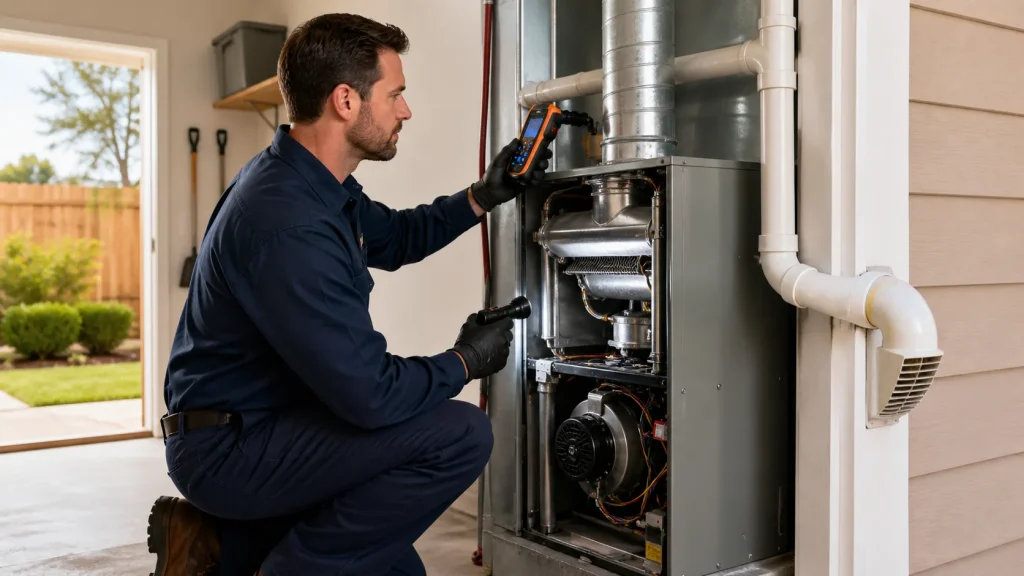
During a carbon monoxide check, a trained technician will typically:
- Perform a combustion analysis to see how cleanly the furnace is burning
- Test draft and flue performance to confirm exhaust is moving the right way
- Check the placement and operation of CO detectors in the home
- Measure CO levels around the furnace and sometimes at supply vents
The goal is simple: make sure your furnace is burning fuel safely and that any CO created is being carried outside, not into your living spaces.
Venting and Airflow Checks That Prevent Backdrafts
Your furnace vent is designed to move combustion gases out of the home. When that vent system is blocked or damaged, those fumes can spill back inside, which is called backdrafting. Even small exhaust leaks are a concern when the furnace runs for long periods during a cold snap.
Common vent problems include:
- Nests, leaves, or debris in or on top of the flue
- Rusted-out vent pipes or weak spots in seams
- Sagging or poorly sloped vent runs that trap moisture
- Termination points that are too close to walls or other obstructions
During a visit, a technician will inspect the vent and flue system for:
- Proper slope from the furnace to the outside
- Tight and secure connections at joints and fittings
- Signs of corrosion, moisture damage, or soot staining
- A clear and safe vent outlet outside the home
House pressure and airflow also affect venting. Closed interior doors, unbalanced ductwork, or strong kitchen and bathroom exhaust fans can pull air the wrong way and cause backdrafting. A professional can check how your furnace, ducts, and exhaust fans interact so problems are corrected before the winter heating season.
Heat Exchanger Red Flags Every Homeowner Should Know
The heat exchanger is the heart of a gas furnace. It is the sealed metal chamber where hot combustion gases flow. Your indoor air passes around the outside of the heat exchanger, picking up heat without ever touching the fumes inside. When this part cracks, rusts through, or warps, combustion gases and carbon monoxide can escape into your airflow.
Some red flags that can point to a heat exchanger issue include:
- Unusual or sharp odors when the furnace first starts up
- Soot, scorch marks, or rust flakes inside the furnace cabinet
- Inconsistent heating from room to room
- Loud bangs, pops, or rattles when the furnace ignites
These signs do not always prove the heat exchanger is cracked, but they mean you should not ignore the system. Professionals use tools like special mirrors, small cameras, and test equipment to inspect the heat exchanger surfaces that you cannot see from the outside.
If the heat exchanger is compromised, repair options are limited. In many cases, a damaged heat exchanger means the furnace is no longer safe to run until it is repaired or replaced. A trained HVAC tech can explain what they find and go over your options so you can make a safe choice for your home.
Professional Maintenance vs. DIY: What the Pros Check
There are a few simple tasks most homeowners can handle, as long as they feel comfortable doing so. These include:
- Changing or checking the air filter on a regular schedule
- Keeping boxes, paint, and clutter away from the furnace area
- Checking batteries and test buttons on smoke and CO detectors
Beyond that, gas furnace work should be handled by trained and licensed technicians. Modern furnaces include gas controls, safety switches, hot surfaces, and electrical parts that need proper tools and knowledge.
A complete heating maintenance visit in Fort Worth usually includes:
- Testing safety controls like limit switches and flame sensors
- Checking gas pressure, ignition sequence, and burner operation
- Cleaning burners and checking for proper flame pattern
- Inspecting venting and flue connections for leaks or corrosion
- Looking over blower components and verifying thermostat operation
Having a consistent local team that works every day in Fort Worth, Aledo, and nearby areas is a plus. Techs who know the common furnace brands in your neighborhood, typical attic or closet setups, and local code requirements can spot patterns quickly and recommend the right fix before small issues grow into safety problems.
Keep Your Fort Worth Home Comfortable All Season Long
Regular heating care helps prevent breakdowns, improves efficiency, and keeps your energy bills in check. Schedule your heating maintenance in Fort Worth with Strickland HVAC and let our team thoroughly inspect and tune your system before the next cold snap. We will walk you through any issues we find so you can make informed decisions about repairs or upgrades. To request an appointment or ask a question, simply contact us today.